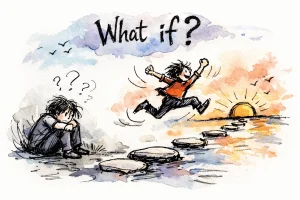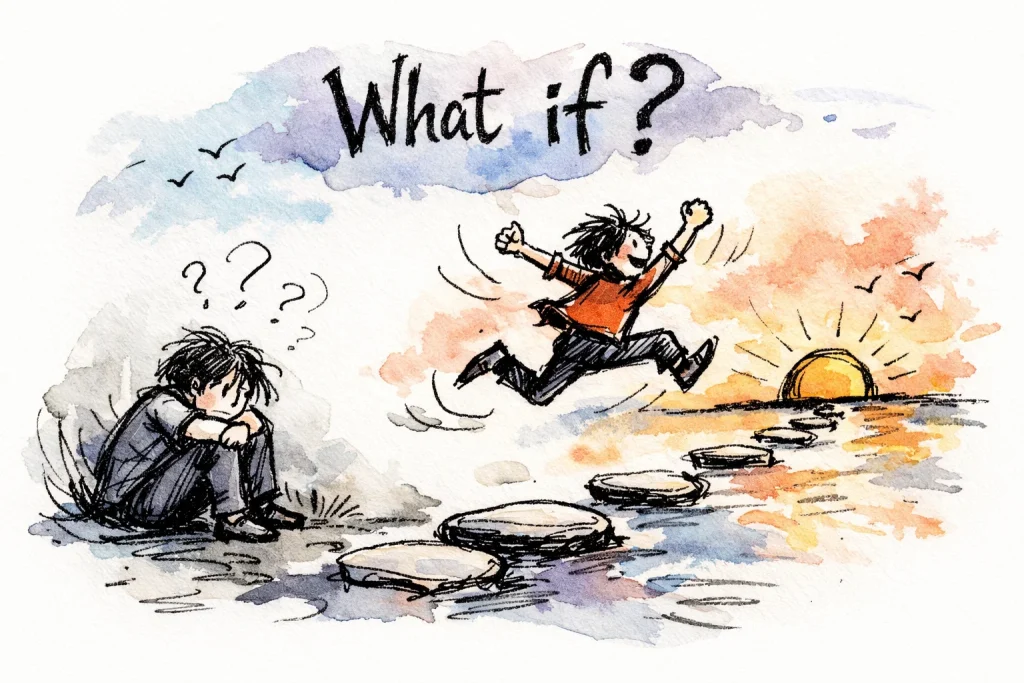
“What if I tried now?”
We almost always stop at that question. It pops into our heads, we half-smile, and life goes on unchanged. Meanwhile, other people test modest paths and turn small chances into results that look like “luck.” It’s not magic – it’s the decision to act before everything is perfect.
In 2026, the illusion of the “ideal opportunity” is even stronger: news, social media, and promises sell the right moment as if it came with a neon sign. Reality is far less romantic. Most turning points begin with a crooked step: a simple prototype, two phone calls, an email that felt too early, an invitation you almost didn’t make.
Why does this matter?
Because time doesn’t come back and the perfect opportunity doesn’t exist. Those who act with clarity- even in small versions- accumulate advantages: they learn faster, fail cheaper, meet people along the way, and become the reference when demand shows up. Standing still “to decide better” is usually the most expensive way to decide.
What changes when you operate in “What if…?”
- You trade fear for curiosity. Instead of “what if it goes wrong?”, it becomes “what will I learn if it doesn’t work?”
- You create repeatable chances. One test leads to another. With each attempt, you improve the message, the price, the format.
- You become visible to the game. Those who move become options when demand appears. Those who wait just watch.
Where to apply it right now
- Career: “What if I propose a 14-day pilot project?” Show value without asking for a year of trust.
- Business: “What if I offer an entry package?” Lower barrier, higher learning.
- Sales: “What if I talk to former clients?” Reactivating is faster than winning from scratch.
- Partnerships: “What if I introduce two companies that benefit from each other?” You become the bridge – and bridges are remembered.
- New skill: “What if I practice 20 minutes a day for 30 days?” Consistency beats motivation.
A simple roadmap to get unstuck
- Define the smallest step that proves something. One scheduled conversation, a prototype, a page with a button.
- Set a short deadline. 7 to 14 days. Focus and limits prevent procrastination.
- Choose one metric. Replies received, meetings booked, tests completed.
- Ask for honest feedback. Three questions: what was clear? what got in the way? what would make you buy/participate?
- Adjust without drama. Keep what worked, remove the rest. Repeat the cycle.
Common traps (and how to escape them)
- Overplanning, underacting. If planning takes longer than execution, reduce the plan.
- Comparing your backstage to someone else’s stage. You see their performance and forget the rehearsals.
- Waiting for confidence to act. Confidence is born after small proofs, not before.
A 10-day challenge
- Days 1-2: write three “What if…?” ideas (one for career, one for business, one personal).
- Day 3: choose one and design the smallest possible test.
- Days 4-6: execute. Don’t over-polish.
- Day 7: collect short opinions from five people affected by the idea.
- Day 8: adjust.
- Days 9-10: run version 2.0 and record what changed.
Signs you’re on the right track
- You have recent stories of attempts, not just intentions.
- You can say, with simple numbers, what improved.
- You receive invitations that didn’t appear before.
- Fear still exists – but it’s smaller than curiosity.
Conclusion
“What if?” can be a bottomless pit- or the door you open today. The difference is turning the question into a small step, with a date and a measure. Trust your capabilities: growth begins where comfort ends. Make a move now – and let the next “What if?” be born from what you learned, not from what you imagined.
That’s it.