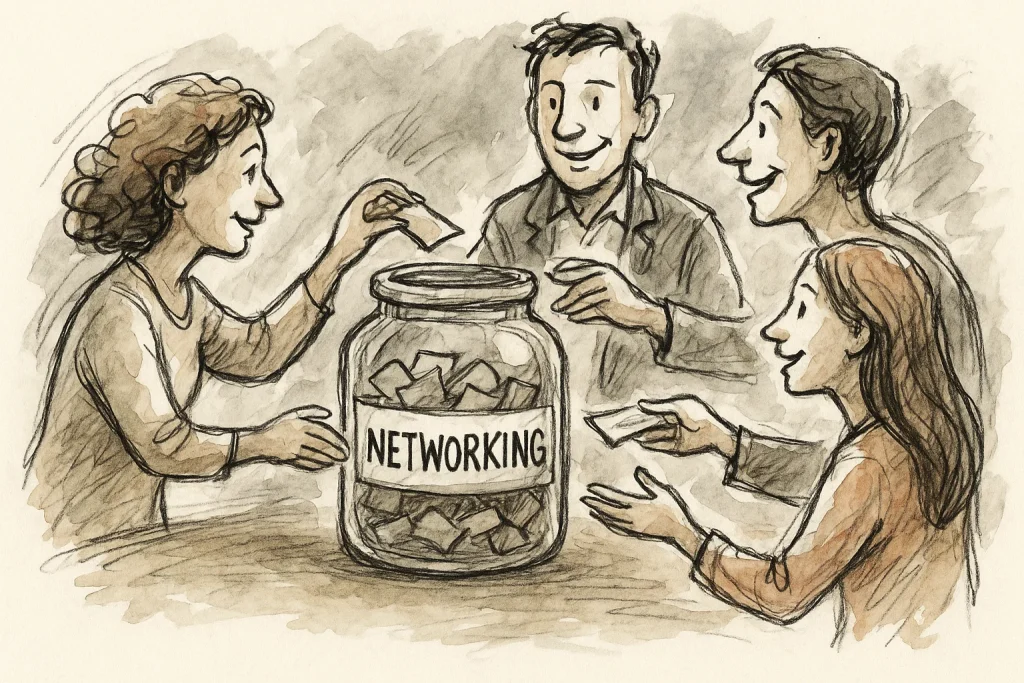
Many people treat networking like a faucet: they turn it on when they need something and off when they’re done. That’s the fastest way to drain your own credibility. Professional relationships work like a bank – you make deposits over time: attention, help, useful information, introductions – and only occasionally make a withdrawal. Those who only show up to ask soon find their balance is zero.
Why Does This Matter?”
Because opportunity travels through relationships. A network where you deposit more than you withdraw builds solid reputation, steady deal flow, and reliable information. Over time, that’s worth more than any campaign: it reduces risk, speeds decisions, and opens doors even when you’re not in the room.
What Counts as a “Deposit”
- Respond thoughtfully: give a clear reply, even if it’s “I can’t, but here’s someone who can.”
- Share something actionable: a contact, a contract template, a mistake you made and how you fixed it.
- Acknowledge publicly: mention who helped, give credit in meetings, tag the person behind the idea.
- Make introductions: the right connections are worth more than advice.
- Show up when no one’s watching: check in after someone’s failure, offer an ear before offering an opinion.
What Isn’t Networking
- Collecting business cards or followers without real conversation.
- Sending cold requests that demand time from people you don’t know.
- Promising and disappearing: worse than not promising at all.
- Becoming a “professional withdrawer”: every contact turns into a new favor.
How to Build a Network That Works (for Both Sides)
- Choose Your Arena
In what topics do you want to be remembered? Focus. Those who talk about everything become a reference for nothing. - Be Useful in Small Doses
Each week, do three simple actions: share a relevant article, make an introduction, answer a question. Consistency beats sporadic intensity. - Ask the Right Way
Context, clarity, and limits: “I need 15 minutes before Friday to review this proposal; if you can’t, no problem.” Make saying yes easy – and respect the no. - Close the Loop
If someone introduced you, let them know what happened. Did it work out? Did it not? That accountability keeps bridges strong. - Keep Your Profile “Usable”
Make clear what you do, what you offer, proof of past work, and how to reach you. Anyone who finds you should understand in seconds how to collaborate. - Create Small Circles
Groups of 4-6 people, monthly meetings with a simple agenda: challenges, learnings, clear asks. Avoid the noise of large communities.
14-Day Plan to Grow Your Balance
- Day 1: list 20 people in your network you genuinely admire.
- Days 2-4: send 5 short messages a day offering something concrete (without asking for anything).
- Day 5: write a short post sharing one practical lesson from your work.
- Days 6-7: make two introductions (A should meet B because…).
- Days 8-10: schedule three 20-minute coffees (online or in person) with the agenda: “How can I be useful in the next 90 days?”
- Day 11: help someone close a small task (review a tough email, suggest a supplier).
- Days 12-14: follow up on all the bridges you created. Close the loop.
Mistakes That Cost You
- Reaching out only when you need something: builds a reputation for constant urgency.
- Confusing access with intimacy: respect people’s time, context, and boundaries.
- Forcing proximity: “let’s collaborate” without a clear reason tires people out.
- Treating contacts as disposable assets: a weak referral burns both the recommender – and you.
Everyday Examples
- You meet a promising analyst who has no room to grow in your current team. Instead of feeling sorry, you introduce her to a friendly company that’s hiring. Two months later, she refers a client to you.
- A supplier misses a deadline. Instead of calling them out publicly, you reach out privately, understand the issue, and renegotiate the schedule. Three weeks later, they warn you about a potential problem before it turns into a crisis.
Signs Your Networking Is Maturing
- People reach out to you before opening a position, launching a product, or starting a partnership.
- You get invited to solve problems that match your expertise.
- Your network gives you early, valuable information – and you respect confidentiality.
- Requests come with clarity because you’ve taught others how you like to collaborate.
Three Questions to Guide Your Interactions
- “What can I add here right now?”
- “How can I make this person’s life easier in 10 minutes?”
- “If I were being recommended, what behavior would I expect from the person being recommended?”
Conclusion
Help first, ask later.
Connections with purpose, not volume.
Be remembered for a clear usefulness.
Follow up and document.
Say “no” respectfully.
Simple, repeatable, effective. A strong network isn’t improvised – it’s built, one meaningful deposit at a time.