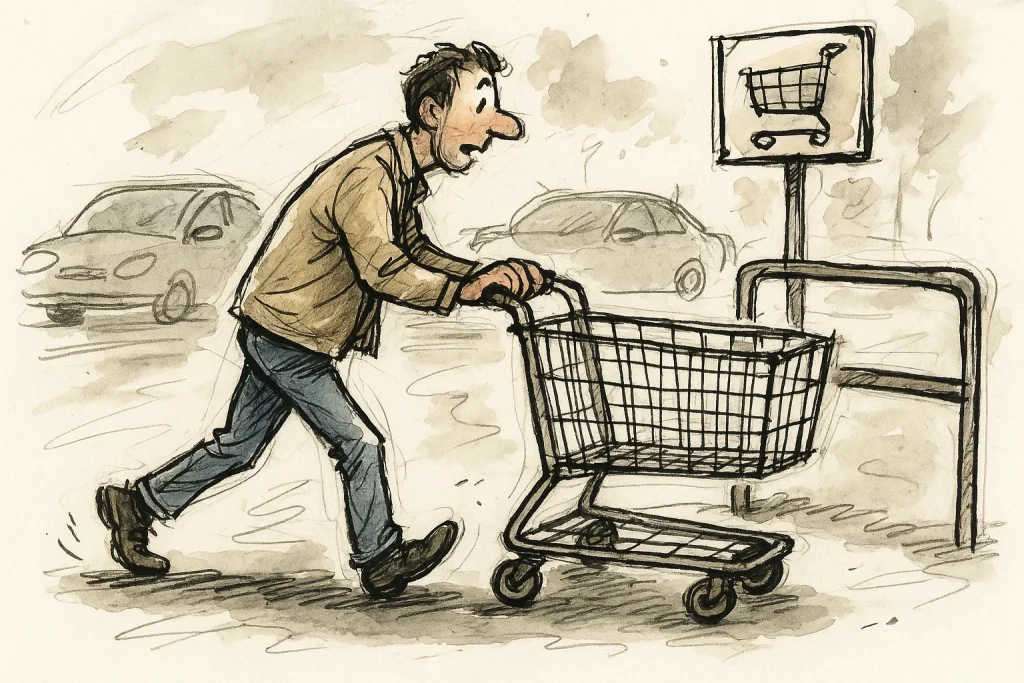
There’s a simple rule for assessing character without speeches: what you do when no one is watching. The “shopping cart theory” explains it well. At the supermarket, returning the cart to its proper place brings no reward and avoids no fine. Still, many people do it. Why? Because they understand that doing the right thing doesn’t require an audience.
Bring this idea into professional life and business. Being what you appear to be means aligning words and actions, from the smallest detail to the biggest decision. It’s not about a perfect image – it’s about consistency.
What the “cart” reveals in everyday work
- Deadlines: you promised “I’ll get back to you by tomorrow”? Then get back — even if it’s to say you need more time.
- Shared spaces: meeting rooms, break areas, team drives. You used it, you put it back in order. Those who take care of what belongs to everyone make everyone’s work easier.
- Promises: clear pricing, clear scope, clear terms. No fine print that confuses.
- Mistakes: you own your part and fix it without excuses.
- Customer service: you respond respectfully, even when the customer is upset.
These actions may seem small, but together they build reputation. And reputation is the kind of “marketing” money can’t buy.
Why Does This Matter?
Because people trust what you do more than what you say. Trust reduces friction, shortens negotiations, brings referrals, and keeps customers when something goes off plan.
How to Practice the Shopping Cart Theory (Without Complication)
- Make smaller promises and keep all of them
Better to say “I’ll deliver on Wednesday at 4 p.m.” than “sometime this week.” Those who keep their word get ahead. - Standardize the basics
Proposal templates, document lists, delivery checklists. This prevents errors and avoids repeated explanations. - Always respond
“Got it, I’ll get back tomorrow.” One line removes anxiety on the other side and shows respect. - Leave traces of care
The client’s name spelled correctly, simple usage instructions, post-sale follow-up calls. People notice when they weren’t “just another one.” - Own it and fix it
Made a mistake? Say what happened, what you’ve already done to fix it, and when it will be resolved. Transparency preserves the relationship. - Take care of the places you pass through
Organized files, tools returned, a clean table before the next meeting. This saves the group’s time – and time is cost.
For Companies: The “Cart” as Culture
- Clear, short policies: what’s included, deadlines, exchanges and returns without traps.
- Measured response time: in hours, not days.
- Internal recognition: applaud those who help behind the scenes, not only those in the spotlight.
- Leadership by example: leaders who keep hours, pay suppliers on time, and apologize when they fail teach more than any lecture.
Quick Consistency Checklist
- Do my proposals say exactly what will be delivered?
- Are my deadlines realistic (and met)?
- Does the customer know who to contact if there’s a problem?
- Do I return “carts” in my work (files, rooms, tasks) without being asked?
- When I can’t help, do I point to another path?
If most answers are “yes,” your practice is already aligned with your message.
Conclusion
The shopping cart theory is a direct reminder: character is proven in the details. Return the cart, respond on time, organize what you used, honor what you promised. There’s no glamour in this – there is trust built day after day. And trust creates something valuable: open doors, loyal customers, and long-term relationships. Want to improve your image? Start with what no one sees. When the routine is right, reputation takes care of the rest.